
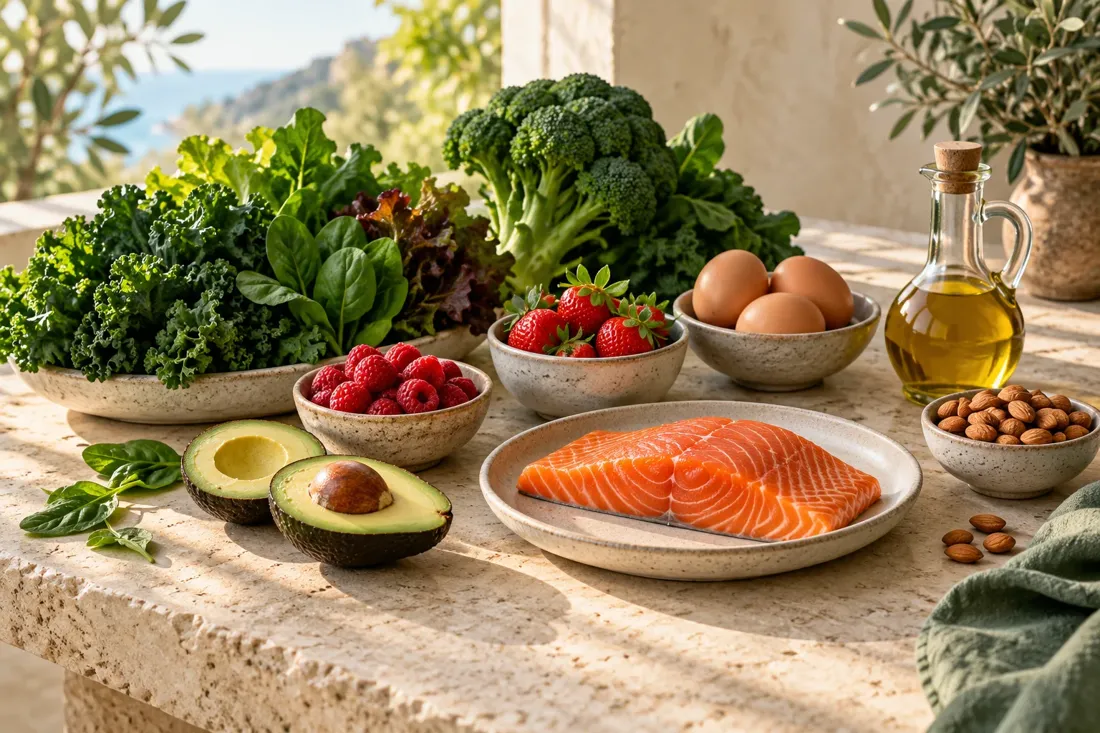
A pantry you can understand
Ingredients are the foods you cook with: meat, fish, eggs, vegetables, fruit, dairy, seeds, oils and seasonings. One ingredient can provide several nutrients. Yogurt provides protein but also carbohydrates; nuts provide fat, some protein and fiber.
Compare equivalent amounts. One hundred grams helps compare foods, but is not a recommended serving of oil, flour or seeds. Then use the actual amount in your recipe.
From package to plate
Check the exact version: plain or sweetened, raw or cooked, drained or with liquid. Water loss during cooking concentrates nutrients per 100 grams even when you have not added food.
- Weigh ingredients in the state specified by the recipe.
- Distinguish canned coconut milk from diluted coconut beverage.
- Choose pasteurized dairy and check allergies.
- Store foods according to the label; natural foods can also become contaminated.
References for further reading
- USDA · FoodData Central ↗
- FDA · Understanding nutrition labels ↗
- FoodSafety.gov · Safe internal temperatures ↗
General educational material prepared in October 2026. This does not replace individual assessment or instructions.